As of 2026, the must-see places in Krabi include Phi Phi Islands Day Tour (canonical), 4 Islands Longtail Tour, Hong Islands Day Tour. See highlights, time needed and tips for each below.
Krabi blends historic landmarks, natural scenery, and local food experiences. We've organized 16 attractions across 4 categories. Each attraction card includes entry fees, opening hours, and local tips so you can plan straight from the page. Use the quick links below to jump to your favorite category.
Common questions about attractions and activities in Krabi.
Ao Nang vs Railay vs Krabi Town vs Klong Muang — where should I base for a first visit?
Ao Nang is the standard first-visit base for trips of 5 nights or fewer. It puts you walking distance from the main beach, Walking Street, and the boat departure point for the 4 Islands and Phi Phi day tours; mid-range hotels run $75-150/night and beachfront 4-star runs $150-300. Railay is the boat-only peninsula — magical for limestone-cliff atmosphere and world-class rock climbing, but no roads and a 15-minute longtail from Ao Nang means moving with luggage is awkward; food prices run about 1.3-1.5x Ao Nang. Best as a 1-night honeymoon or climber pick (Rayavadee $700-1,500, Sand Sea $100-250, Railay Cabana $20-50). Klong Muang and Tubkaek north of Ao Nang are the quieter luxury strip — Phulay Bay a Ritz-Carlton Reserve ($500-1,200), Sheraton Krabi Beach Resort ($200-500), Beyond Resort ($150-300) — ideal for resort-focused honeymoons but 25-30 minutes from Ao Nang restaurants. Krabi Town is for budget travelers and transit stays only ($25-100/night). Families and first-timers: Ao Nang. Honeymoon: Ao Nang plus 1 night Railay or the full Klong Muang stay. Climbers and Instagram: Railay direct.
Phuket or Krabi first — and how many days to combine the two?
From most international hubs, Phuket has the bigger airport and cheaper flights, so the standard pattern is Phuket in then ferry (90 minutes, $20 one-way on Songserm or Phuket Ferry, runs November to April) and out from Krabi (or the reverse). For a 7 to 8 night trip: Phuket 3 nights (Patong, Kata, or Kamala) plus Krabi 4 nights (Ao Nang 3 plus Railay 1) is the canonical combo. Phuket is bigger, more developed, and has more nightlife and food variety; Krabi is quieter with the dramatic limestone landscape, world-class climbing, and a slower beach pace. If you're choosing one only: Phuket if you want nightlife and convenience, Krabi if you want scenery and atmosphere. The ferry is the recommended transfer — minivans (2.5-3 hours, $12) save money but trade off motion sickness and traffic risk. If you're flying via Bangkok anyway, add 2 nights in Bangkok for a 9 to 10 night version.
Which day tour is the best value — 4 Islands, Hong Islands, Phi Phi, or Bamboo Island?
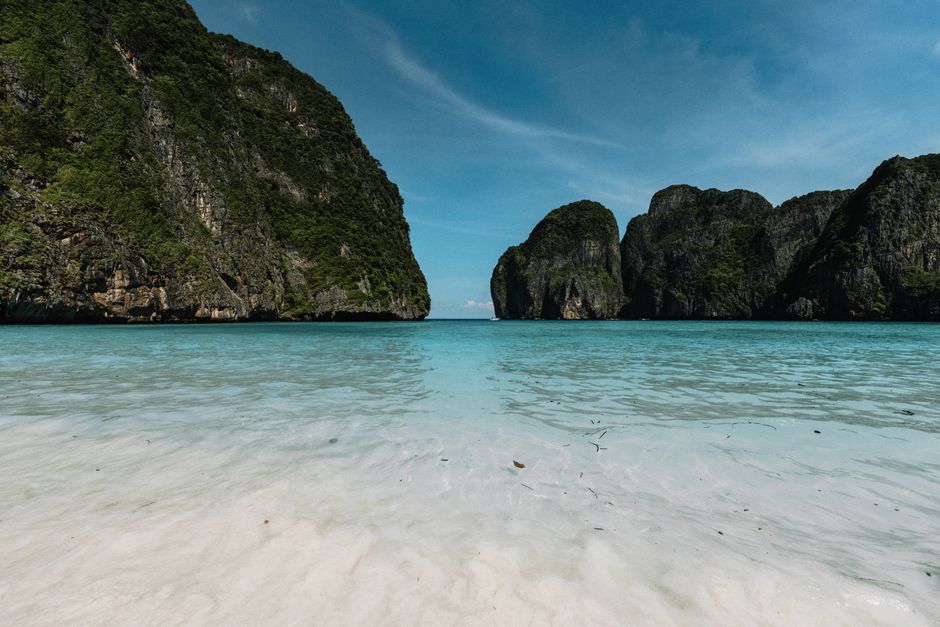
The 4 Islands longtail tour is the value pick — $25-40 for a half day covering Chicken Island, Tup Island, Poda Island, and Phra Nang Beach, with the tide-dependent sand walkway between Tup and Chicken as the photo moment. Hong Islands ($40-60) is the runner-up — the hidden emerald lagoon enclosed by limestone cliffs (accessible only at high tide) is more distinctive than the 4 Islands stops, and the crowds are lighter than Phi Phi. Phi Phi day tour ($50 speedboat) is mandatory if Maya Bay is on your list, but it's a 3-hour round trip, the crowds are heavy, and swimming at Maya Bay is forbidden since 2018. Bamboo Island is usually a bundled stop inside Phi Phi or 4 Islands tours rather than a standalone trip. If you have time for two: 4 Islands plus Hong Islands hits the most variety. Klook and GetYourGuide pre-bookings save 15-20% versus the Ao Nang walk-up agencies.
How do I get to Railay Beach — and is it worth staying a night versus doing it as a day trip?
Railay is boat-only. The three standard routes: longtail from Ao Nang Beach to Railay West ($3-5 round-trip, 15 minutes, runs 6 AM to 6 PM); longtail from Krabi Town pier (Chao Fah pier) to Railay East ($8 round-trip, 30 minutes); and free hotel shuttle if you're staying at Rayavadee or Phulay Bay. Day-tripping is fine for budget visitors — but boats stop running after dark, so the last longtail back is roughly 5:30 PM, and you'll miss sunset, sunrise, and the night-sky atmosphere. Staying 1 night is strongly recommended — Sand Sea Resort ($100-250), Railay Bay Resort ($80-200), or Rayavadee ($700-1,500) all let you enjoy the limestone-cliff peninsula after the day-trippers leave. Downsides of staying: limited restaurants (prices roughly 1.3x Ao Nang), only one ATM (bring $90-150 in baht cash), and you have to commit to longtail logistics for any food or drink runs. Honeymoon and families: 1 night. Solo and budget: day trip plus a sunset boat tour ($20-40).
Can a complete beginner try rock climbing at Railay — and what's the cost and gear?
Yes. Railay is one of the world's top 5 limestone climbing destinations (700+ routes), but the beginner one-day course is standardized and accessible to anyone with average fitness. King Climbers, Real Rocks, Tex Climb School, and Hot Rock are the four main schools. Half-day intro $30-45 (3-4 hours, 5-6 routes), full-day $55-75 (9-10 routes plus lunch), 3-day package $135-180. Climbing shoes, harness, helmet, and ropes are all included — no gear to bring (your own climbing shoes if you have them are welcome). Railay East has the beginner-friendly clusters (grades 5.6 to 5.10a); Tonsai is the intermediate-to-advanced area. December through March is the dry-season prime; the May to October wet season has slippery rock and partial route closures. Book through Klook, Bookaway, or directly with the school via website or LINE. Even for honeymooners, one beginner session here is a memorable add-on.
Is the wet season (May to October) still worth visiting — and what should I expect for prices, boats, and storms?
Worth it if you understand the trade-offs. Hotels run 30-50% off (a $80 mid-range becomes $50), and the jungle, waterfalls, and Emerald Pool are at their greenest. Downsides: some boat tours pause May to September on rough days (Phi Phi and Hong Islands are the most affected); afternoon thunderstorms of 1-2 hours hit almost daily; Andaman Sea swells and red-flag beach days are common; September is the peak of the rainfall. June, July, and early November have shorter, more concentrated rain — plan morning activities and afternoon pool or spa days and you'll still have a strong trip. Typhoons rarely hit the western Andaman coast directly, but Indian Ocean cyclone influence can bring strong winds and rough seas. If you're going wet season: book through operators with clear refund policies (Klook, GetYourGuide), build a 1-day buffer into the itinerary, and pack a waterproof phone case and quick-dry clothing. The 4 Islands tour and Railay run on most wet-season days; Phi Phi cancellations are more frequent September and October.
Watch out for scams or overcharging on longtails, tuk-tuks, and songthaews?
Krabi has lower scam frequency than Phuket or Bangkok, but four patterns recur. First, longtail boat night surcharges and per-person miscounts: confirm the price ($3-5 per person Ao Nang to Railay, return separately) plus headcount plus round-trip versus one-way in English before boarding, and ask for a receipt. After-dark trips up to $6 are normal. Second, tour booth 'special discount' bait: same-day booking pressure followed by a quiet swap to a slower longtail. Always confirm speedboat versus longtail, lunch included, and national park entry fees separately. Third, Ao Nang massage upsells: 30-minute Thai massages that suddenly include 'free' oil, foot, or head additions billed at the end — get the menu and price in a photo before starting. Fourth, monkey photo schemes at Tiger Cave and Railay: someone hands you a monkey, then demands $15-30. Decline all outdoor monkey photo requests. Fifth, fake tour offices: stick to main-street agencies with physical signage and compare prices at 2-3 spots. Grab works in Ao Nang and Krabi Town partially — for tuk-tuks without meters, cross-check with the Grab app estimate before agreeing.
Where do international travelers usually skip — quieter beaches and local favorites that aren't on the tour menu?
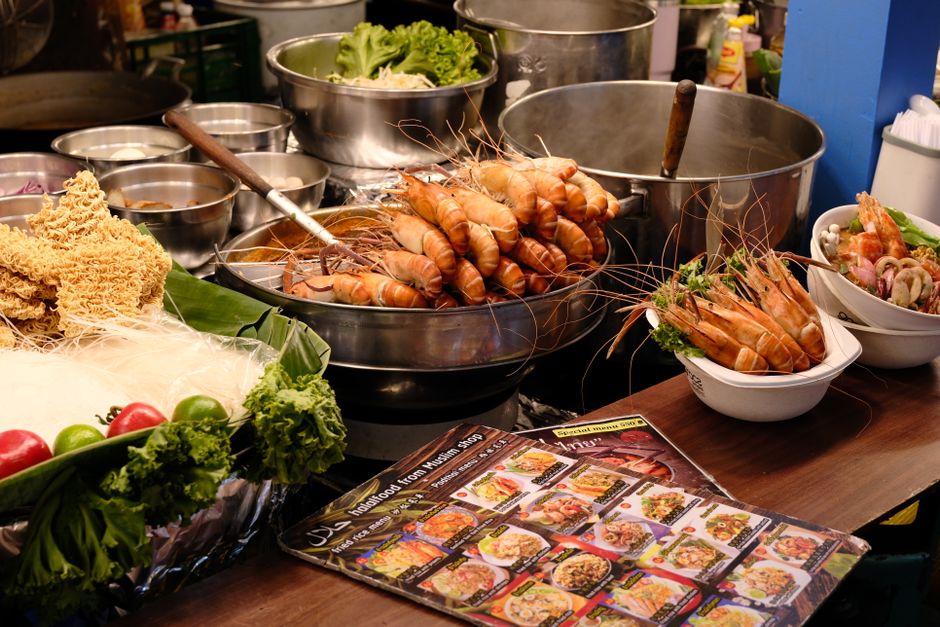
Five less-touristy picks. First, Tonsai Beach — next to Railay but with a climber, hippie, and backpacker vibe, much quieter. Walk 20 minutes from Railay West at low tide or take a $3 longtail. Second, Klong Muang and Tubkaek to the north — the luxury-resort strip is 30 minutes by car from Ao Nang with empty sunsets and no tour-group crowds. Third, Krabi Town Chao Fah Walking Street (Friday to Sunday 5 PM to 10 PM) — 3-4x the size of the Ao Nang Night Market, with roughly 80% local crowd, live music, and meals at $3-6. Fourth, Krua Thara in Saithai (10-minute drive from Ao Nang) — the local-favorite seafood restaurant; grilled red snapper $12-18 and the most authentic Krabi seafood experience. Fifth, Hui To Kaek (Tubkaek) beach plus a sunset at an unstaffed beach bar. Bonus food pick: Khao Soi Halal in Ao Nang's back lanes ($2-5) — Krabi's 40% Muslim population means authentic halal khao soi is hiding in plain sight. For 5+ night trips, add Koh Lanta (2-hour ferry south) as a quieter 1-night extension.
More on Krabi
Cost guide, itineraries, hotel picks — everything in one place.
Jimmy Kong
TripPick founder · Travel content creator
Based in Chiang Mai for 8+ years, with 30+ countries visited across Southeast Asia, Japan, and Europe. Every detail in this guide is primary-source verified as of April 2026, with prices auto-refreshed via live exchange rate APIs. This isn't AI-generated boilerplate — it's written from the perspective of someone who has actually been there.
8+ years analyzing travel data
30+ countries visited
Live exchange rate verified
 Thailand
  1
1